


Enterprises are moving away from SaaS video platforms as multi-tenant communication tools no longer meet the compliance, governance and control requirements of modern organizations. As real-time communication becomes a core operational layer, companies need ownership over media infrastructure, data routing, encryption and AI processing.
Sovereign Communication Infrastructure addresses these gaps by enabling private, controlled and architecturally independent deployments that reduce vendor dependency and metadata exposure. The shift is driven by infrastructure-level risks, including centralized signaling, opaque data routing and limited governance visibility.
So, this blog explores why enterprises are transitioning to sovereign communication infrastructure and what this shift means for modern communication architecture.
The Shift Toward Sovereign Communication Infrastructure
The industry is moving away from the “one-size-fits-all” public cloud model toward a framework of Technical Agency. Sovereign infrastructure is defined by the enterprise’s ability to exercise absolute control over its communication stack independent of third-party vendors or foreign jurisdictions.
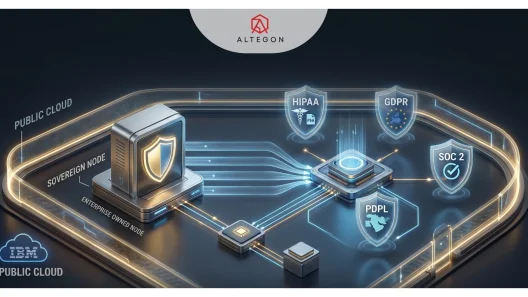
This shift is not merely a reaction to increased cyber threats; it is a fundamental realignment of how global organizations manage risk. We are seeing a move toward the Sovereign Communication Stack, where the real-time media engine is hosted within private, controlled environments. This allows for:
- Jurisdictional Certainty: Ensuring that data and signaling remain within specific legal borders to comply with frameworks like GDPR or the EU Cloud Act.
- Architectural Autonomy: The ability to customize the transport protocols and routing logic to meet specific low-latency or high-security requirements.
- Cryptographic Control: Moving beyond vendor-managed encryption toward a model where the enterprise retains exclusive ownership of the Key Management System .
| Did You Know ? A 2026 research report from Arqit reveals that 62% of enterprise leaders cite data sovereignty and privacy risks as the primary factor slowing down AI projects in the public cloud, highlighting that infrastructure ownership is now a ‘project gating’ issue.” |
The Limitations of SaaS Communication Platforms
SaaS video platforms were built for rapid adoption and global scalability, but these design priorities introduce architectural compromises that increasingly conflict with enterprise governance requirements. This is why many organizations are realizing why enterprise communication infrastructure is becoming a strategic digital asset.
Multi-Tenant Opacity
SaaS platforms operate in shared environments where multiple organizations rely on the same signaling and media infrastructure. This creates a shared-risk model where vulnerabilities, misconfigurations, or service disruptions at the provider level affect all tenants.
Enterprises lack visibility into routing paths, processing nodes, and storage locations, making it difficult to enforce strict governance policies.
Metadata Exposure
Even when media streams are encrypted, SaaS platforms typically retain control over signaling metadata. This is a critical concern explored in our complete guide to communication compliance for regulated industries, as metadata can reveal organizational hierarchy and strategic behavior.
This metadata can reveal organizational hierarchy, communication frequency and strategic behavior making it highly sensitive for regulated industries.
Vendor Lock-In
Enterprises that build workflows around proprietary SaaS APIs become dependent on vendor roadmaps, pricing structures, and infrastructure decisions. Migrating away from these platforms becomes complex and costly.
Sovereign communication infrastructure removes this dependency by allowing enterprises to build on open standards and portable architecture.
position of dependency to a position of ownership.
Architecture Behind Sovereign Real-Time Communication
Building sovereign communication infrastructure requires control across the entire stack. This ownership is the primary reason why IT managers are pulling video hosting out of the cloud and moving toward private deployments.
Flat-Rate Infrastructure Model
Modern sovereign communication platforms increasingly adopt a flat-rate pricing model instead of per-minute or per-participant billing. Traditional SaaS video platforms tie pricing directly to usage, which makes large-scale deployments unpredictable and expensive. In contrast, sovereign infrastructure operates on dedicated media capacity, where enterprises provision resources based on expected demand.
This approach provides:
- Predictable communication costs
- No per-minute or per-user billing
- Scalable infrastructure without pricing spikes
- Better cost control for large deployments
By decoupling usage from pricing, organizations can scale meetings, webinars, and internal collaboration without worrying about incremental cost increases.
Low-Latency Routing and Private Edge
Sovereign deployments use distributed media nodes hosted in private environments, enabling geographic routing control and network isolation. This is essential because live video is the heartbeat of digital communication for modern operations.
This enables:
- Geographic routing control
- Reduced latency
- Data localization enforcement
- Network isolation
Organizations can ensure communication traffic remains within approved infrastructure boundaries.
Private Cloud Orchestration
Sovereign communication systems are typically deployed as containerized services managed through orchestration platforms. This allows enterprises to scale media capacity dynamically while maintaining control over signaling and identity layers.
Hybrid deployment models allow enterprises to combine private infrastructure with controlled cloud expansion during peak demand, while still operating within a predictable flat-rate infrastructure model.
Data Sovereignty in Video Communication Systems
In sovereign communication infrastructure, data sovereignty is enforced architecturally rather than contractually.
The signaling plane and media plane are separated into distinct control layers. Enterprises can host signaling services in hardened environments while distributing media nodes closer to users for performance optimization.
This separation enables:
- Controlled authentication
- Regional routing enforcement
- Secure session management
- Data residency compliance
Recording, transcripts and analytics outputs can be stored directly in enterprise-owned storage environments. This ensures communication data follows internal governance policies instead of vendor-defined retention rules.
For a deeper look at managing these risks, consult the enterprise tech sovereignty guide 2026.
The Role of Sovereign AI in Communication Platforms
AI-powered meeting features introduce new data governance challenges when processed through third-party SaaS providers. Many platforms transmit audio streams to external AI services for transcription, summarization, and analytics.
Sovereign AI addresses this by running AI workloads inside enterprise-controlled infrastructure.
This includes:
Private Transcription
Speech-to-text processing runs within enterprise infrastructure, eliminating external data exposure.
Secure Meeting Summaries
Language models generate summaries without sending conversation data to public AI providers.
Infrastructure Optimization
AI models analyze network conditions and optimize media routing while preserving privacy.
By embedding AI into sovereign communication infrastructure, enterprises gain intelligence without sacrificing data control.
Industry research shows that 83% of enterprise leaders now consider data sovereignty a key factor in IT strategy and 62% report that data sovereignty concerns are slowing cloud AI adoption highlighting risk beyond simple cloud convenience.
Building the Sovereign Communication Stack
A sovereign communication platform consists of multiple infrastructure layers working together:
- Private cloud, on-premise environments or sovereign hosting regions.
- WebRTC engines and routing infrastructure.
- Enterprise authentication integrated with internal identity providers.
- Enterprise-controlled encryption and key management systems.
- Controlled storage for recordings, transcripts and analytics.
- Private inference services for transcription and meeting intelligence.
- Together, these layers create a fully controlled communication environment.
Enterprises are no longer renting meetings – they are owning the digital boardroom.”
Wrapping Lines!
The move from SaaS video platforms to Sovereign Communication Infrastructure reflects a broader transformation in enterprise technology strategy. Organizations are no longer willing to outsource critical communication systems to shared, opaque environments.
Instead, enterprises are building private, controlled communication stacks that provide visibility, governance and long-term autonomy. This shift enables organizations to protect sensitive conversations, comply with regulatory requirements and integrate AI without exposing critical data.
As real-time communication becomes foundational to enterprise operations, infrastructure ownership is becoming a strategic necessity. Sovereign communication systems represent the next evolution transforming communication platforms from vendor-controlled services into enterprise-owned digital infrastructure. global models owned by third parties. This level of transparency and control is a major competitive advantage in highly regulated sectors like finance and healthcare. advantage rather than a governance risk.