
For a long time, we’ve treated enterprise video tools like office furniture. You pick a vendor, pay the monthly “per-seat” tax, and hope the “Join Meeting” button works when the board convenes. It’s been a decade of convenience over control.
But here’s the cold, hard truth: If you don’t own the plumbing, you don’t own the house.
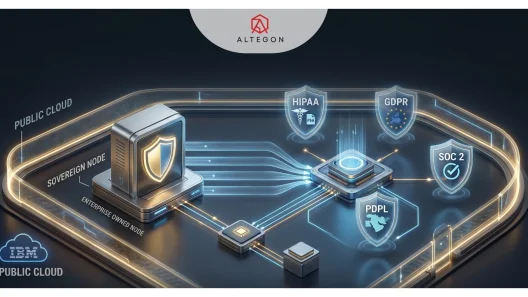
In recent years, relying on a “black-box” SaaS provider for your company’s internal conversations isn’t just a budget line item; it’s a massive strategic blind spot. We are seeing a massive shift. Most organizations are moving away from “rented apps” and moving toward Sovereign Communication Infrastructure.
Let’s get into why this is happening and why the “convenience” of the cloud is starting to feel like a trap.
For years, enterprise communication tools were treated like office furniture. You picked a vendor, paid the monthly “per-seat” tax, and hoped the “Join Meeting” button worked. It was a decade where convenience was prioritized over control.
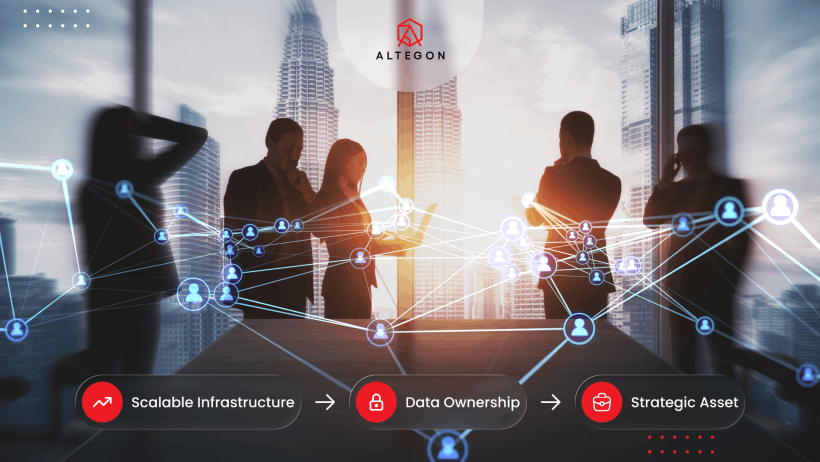
But as data becomes an organization’s most valuable currency, a strategic shift is happening. Forward-thinking enterprises are moving from “rented apps” toward Sovereign Communication Infrastructure to gain true architectural empowerment.
The Strategic Shift: From Tenants to Owners
When you use a standard SaaS platform, you are a tenant in a shared environment. For a global enterprise, this “one-size-fits-all” model presents specific strategic considerations:
- Routing Oversight: Without infrastructure control, you have limited visibility into the geographic paths your data takes.
- The Scalability Curve: SaaS models often scale costs linearly with headcount. As your team grows, your licensing fees increase, regardless of whether your actual infrastructure needs have changed.
- Data Governance: While many platforms offer encryption, the metadata (logs of session duration, participant locations, and connection types) remains outside your direct control.
| Strategic Insight:Real-time interaction is no longer just a feature; it is the core of how business moves. Understanding why live video is the heartbeat of digital communication helps explain why owning this “pulse” is a competitive advantage. |
SaaS vs. Sovereign: Empowering the Enterprise
| Feature | The Standard SaaS Model | The Sovereign Infrastructure Model |
| Data Control | Access is managed by the provider. | You own the raw data, logs, and encryption keys. |
| Environment | Shared Tenancy. | Dedicated, isolated infrastructure. |
| Cost Model | Per-user (Scales with headcount). | Resource-based (Predictable at scale). |
| AI Integration | Third-party AI (Shared data pools). | Sovereign AI (Private, internal learning). |
4 Steps to Building a Communication Asset
Step 1: Media Traffic Visibility
Map your signaling and media data flows. This provides clarity on dependencies and ensures alignment with regional data residency requirements.
Step 2: Define the Sovereign Perimeter
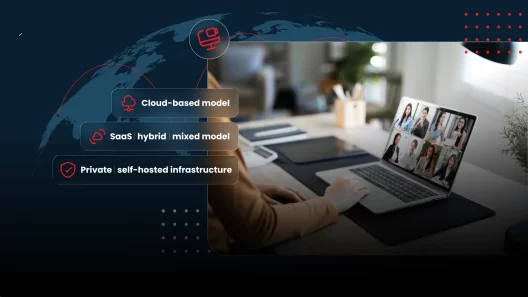
Establish where your core services run. Whether it’s a dedicated private cloud or a secure hybrid deployment, this becomes your controlled infrastructure layer. For many, this is the first step in mastering communication compliance in regulated industries, where knowing exactly where data lives is a legal mandate.
Step 3: High-Performance Media Orchestration
Modern sovereign stacks focus on efficient media routing. By deploying your own media servers, you gain the ability to:
- Optimize Path Selection: Direct traffic through the most efficient routes.
- Minimize Systemic Latency: While the “last mile” depends on the user’s ISP, owning the infrastructure allows you to place ingest nodes closer to your global offices.
- Scale Efficiently: Manage high-concurrency events without being throttled by a provider’s shared limits.
Step 4: Integrate Sovereign AI
AI is the future of productivity. By hosting AI services within your own perimeter, you can utilize AI in enterprise communication platforms without losing data control. This ensures that proprietary company data from board meetings to product roadmaps is never used to train public models.
The Reality of Ownership: A Long-Term Investment – h2
Moving to a sovereign stack is a significant architectural decision. Unlike “plug-and-play” SaaS, owning your infrastructure involves:
- Dedicated Management: Internal or partner-led teams to handle server maintenance and actively monitoring.
- Initial Setup: A deeper focus on the initial deployment to ensure the system is optimized for your specific global footprint.
However, the “SaaS Tax” (per-seat costs and bandwidth markups) often outweighs these operational costs as an organization scales. Sovereignty is about trade-offs: you trade the simplicity of a “rented” app for the power, privacy and long-term cost-efficiency of an owned asset.
Wrapping Lines!
Moving to a sovereign stack isn’t just a security move; it’s a power move. It’s about ensuring that your company’s most sensitive conversations happen on a foundation you control.
At Altegon, we specialize in helping enterprises navigate this transition moving away from restrictive models and toward high-performance, private communication stacks that scale globally.
Frequently Asked Questions (FAQs)
1. What exactly is Sovereign Communication Infrastructure?
It refers to a communication system (video, voice, chat) that an organization hosts within its own controlled environment such as a private cloud or dedicated data centers rather than “renting” access from a third-party SaaS provider.
2. Is Sovereign Infrastructure more expensive than SaaS?
Initially, setup and maintenance require an investment. However, for large enterprises, it becomes more cost-effective over time because it eliminates “per-seat” licensing and bandwidth markups, making costs predictable as headcount grows.
3. Can we remain sovereign while using the Public Cloud (AWS/Azure)?
Yes. Sovereignty is about control, not just physical hardware. By using “Bring Your Own Key” (BYOK) encryption and managing the software layer yourself, you can maintain data sovereignty even on public cloud infrastructure.
4. How does Sovereign AI differ from Public AI tools?
Public AI tools often process your data on their own servers, where it may be used to train their general models. Sovereign AI runs within your secure perimeter; your data never leaves your control and is used only for your specific enterprise needs.
5. Does owning the infrastructure affect video quality or latency?
Owning the infrastructure actually allows you to improve quality. You can deploy media nodes closer to your employees’ physical locations, reducing the distance data travels and minimizing systemic delays (latency).