




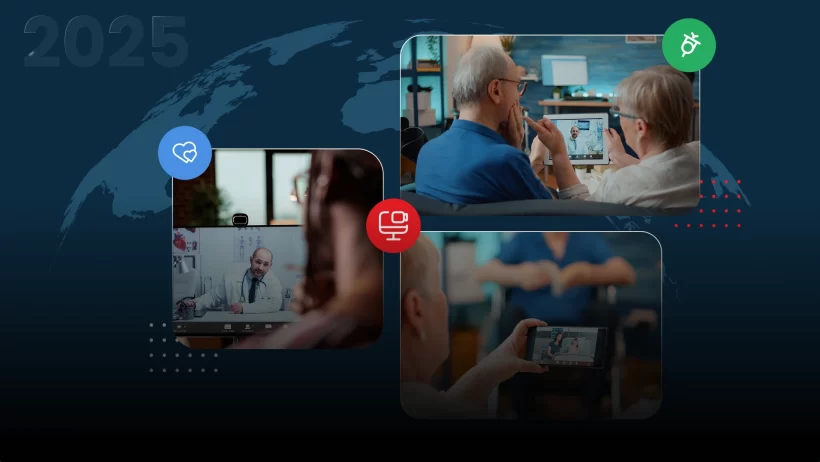
Telehealth is no longer an auxiliary channel in healthcare delivery. In 2026, video communication has become a core clinical interface supporting consultations, diagnostics, remote monitoring and patient engagement at scale. This shift is not driven by convenience alone. It reflects a broader transformation in healthcare infrastructure, where video systems must now meet the same standards as other critical clinical technologies: reliability, security, compliance and performance.
As a result, healthcare organisations are moving beyond basic video tools toward purpose-built sovereign video infrastructure. The procurement decisions being made today will determine which systems can support regulated, scalable and data-sovereign care delivery through the end of the decade.
How Video Streaming Is Transforming Telehealth
The clinical viability of telehealth has advanced significantly as video streaming infrastructure has matured. In 2026, enterprise-grade sovereign video platforms can now deliver the resolution and latency standards required for clinical-quality consultations – including detailed dermatological assessments, respiratory evaluations and real-time diagnostic review. For healthcare organisations, this means that video is no longer a workaround for in-person care; it is a compliant, scalable clinical modality in its own right.
For hospital administrators and CIOs, this adoption rate represents a strategic opportunity for longitudinal patient engagement. When care is accessible within a patient’s routine, treatment compliance improves. Sovereign video infrastructure is central to enabling this model at scale.
Key clinical capabilities enabled by enterprise video infrastructure:
- Diagnostic-Grade Visual Fidelity: HD and 4K-capable streams support accurate remote assessment of physical symptoms, reducing the need for unnecessary in-person referrals.
- Low-Latency Clinical Interaction: Sub-second latency ensures real-time clinical decision-making is not compromised during consultations.
- Equitable Access at Scale: Sovereign video infrastructure enables consistent care delivery across geographically dispersed patient populations, including underserved regions
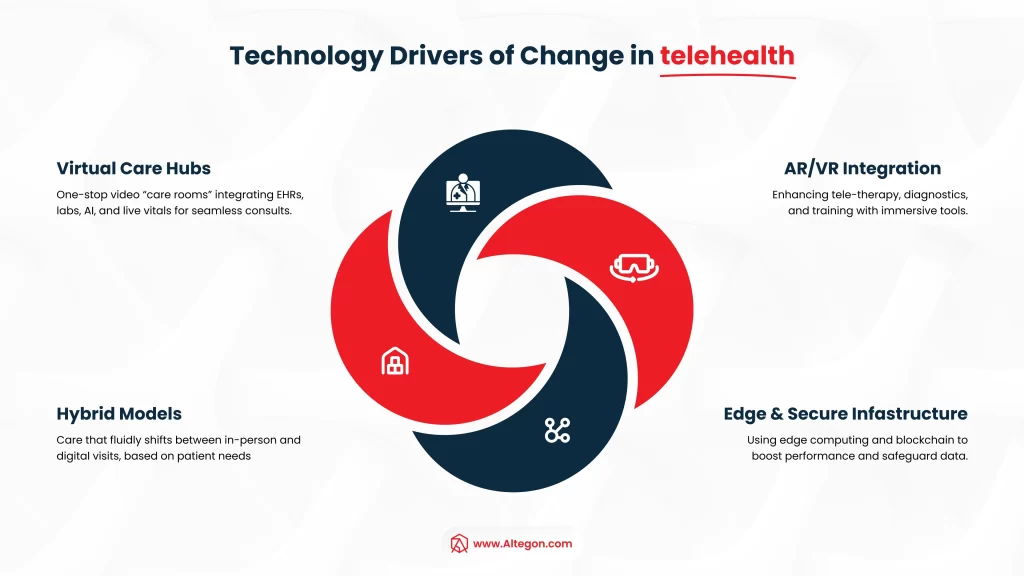
Regulatory Compliance for Clinical Video: A Global Overview
| Region | Key Frameworks | Enforcement Body | What the Video Platform Must Provide |
| United States | HIPAA Security Rule HITECH Act BAA requirement | HHS Office for Civil Rights (OCR) CMS | End-to-end encryption for ePHI. Role-based access controls. Full audit trail of session activity. Signed Business Associate Agreement (BAA) before any PHI is processed. Breach notification within 72 hours. |
| GCC (Saudi Arabia / UAE) | Saudi PDPL 2021 NDMO Data Classification Saudi MOH Digital Health Strategy UAE Federal Data Protection Law 2021 | Saudi: SDAIA / NCA UAE: TDRA / DHA / DOH | Data residency: health data must be stored and processed within national borders. No cross-border transfer without regulatory approval. Sovereign Node deployment required. Alignment with Saudi MOH Digital Health Strategy 2030 and SDAIA guidelines. |
| European Union (+ UK post-Brexit) | GDPR Article 9 EU Medical Device Regulation (MDR) European Health Data Space (EHDS) UK NHS DSPT | EU: National DPAs (e.g., BaFin, CNIL, ICO) UK: ICO / NHS Digital | Lawful basis for processing health data (explicit consent or substantial public interest). Data subject rights (access, erasure, portability). DPO appointment for large-scale health data processing. NHS DSPT compliance for UK deployments. EHDS interoperability standards where applicable. |
| Pakistan | Pakistan Data Protection Bill (PDPB) – in progress Pakistan Electronic Crimes Act (PECA) 2016 National AI Policy 2025 Digital Nation Pakistan Act 2025 | Anticipated: NPDPA Currently: FIA / PTA | Data localisation requirements anticipated under PDPB. Government Cloud (GovCloud) preference for public sector health deployments. Alignment with National AI Policy 2025 on Auditable AI. Note: PDPB has not yet been fully enacted – verify current legislative status before publication. |
Optimising Clinical Workflows with Sovereign Video
The shift toward virtual-first care is accelerating as healthcare organisations look to optimise resource allocation. For hospital administrators and CIOs, this adoption rate – particularly across behavioural health and chronic disease management – represents a strategic opportunity for longitudinal patient engagement. When care is accessible within a patient’s routine, treatment compliance improves. This reduces costly hospital readmissions and enables health systems to direct physical facility resources toward the high-acuity cases that genuinely require in-person intervention.
Sovereign video infrastructure is central to enabling this model at scale. Unlike consumer-grade video platforms, purpose-built clinical infrastructure ensures that data generated during virtual encounters remains within defined jurisdictional boundaries – a non-negotiable requirement under regional compliance frameworks.

Scaling Telehealth at Enterprise Level
Data Residency at Scale
As patient volume and facility count increase, so does the volume of protected health information traversing the infrastructure. Each additional site introduces data residency obligations — requiring that processing and storage occur within applicable jurisdictional boundaries, not only at the primary data centre but at every point of presence across the network.Network Performance Across Geographies
Clinical-grade video quality is non-negotiable. At scale, sustaining low-latency performance across geographically dispersed facilities, including regions with variable network infrastructure, requires an architecture engineered for distributed load, not adapted from a single-site deployment model.Unified Governance Across Distributed Nodes
Compliance officers and CISOs cannot audit dozens of independently managed local systems. Enterprise telehealth infrastructure must provide a centralised governance layer, unified access controls, audit trail generation and security policy enforcement, that operates consistently across every deployment node, regardless of geography. Altegon’s sovereign video infrastructure is designed to address these challenges at the architecture level. The Sovereign Node supports distributed multi-site deployment under a unified administrative framework, enabling healthcare systems to expand telehealth operations without fragmenting compliance governance or introducing per-site infrastructure complexity.How Altegon Enables Compliant Telehealth Infrastructure
Altegon provides the sovereign video infrastructure that enables healthcare organisations to operate compliant, scalable and secure telehealth environments. A clinical video interaction is a regulated medical event: it generates protected health information (PHI), must meet healthcare data compliance standards and must be documented within the patient record. Altegon’s platform is engineered to meet these requirements by design, not by configuration.
Altegon’s core infrastructure capabilities for healthcare:
- Altegon Connect: Delivers enterprise-grade video performance with guaranteed uptime SLAs, ensuring clinical continuity across high-volume telehealth environments. Stream quality and failover architecture are optimised for regulated healthcare use cases.
- Sovereign Node Deployment: Altegon’s Sovereign Node enables healthcare organisations to host video processing and PHI handling within their own jurisdictional boundaries – satisfying regional compliance frameworks for data residency.
- PHI Security Architecture: End-to-end encryption, role-based access controls and audit trail generation are built into the platform, providing the technical safeguards required under applicable healthcare data compliance standards without requiring custom configuration by the client’s IT team.
- Clinical Systems Integration: Altegon’s API layer supports direct integration with EHR platforms, enabling structured clinical data, including video session metadata and automated documentation, to flow directly into patient records. This eliminates manual transcription workflows and reduces administrative burden on clinical staff.
For CISOs and compliance officers, Altegon’s architecture is designed to satisfy Business Associate Agreement (BAA) requirements, Data Processing Agreement requirements under GDPR and equivalent agreements under PDPL and anticipated PDPB requirements. The platform supports the audit trail documentation required for regulatory review across all supported jurisdictions.
Learn more about Altegon’s Compliant Video Infrastructure for Regulated Industries.
Smarter Care: Private AI and Clinical Intelligence
United States
Under US healthcare data compliance frameworks, AI systems processing protected health information must operate within the same data governance boundaries as the clinical systems they support. AI inference outputs, session data and model interactions must be treated as regulated health data, subject to access controls, audit trail requirements and breach notification obligations. AI systems that route protected health information through third-party cloud infrastructure introduce compliance exposure that sovereign deployment eliminates by design.European Union and United Kingdom
The EU AI Act (2024) classifies AI systems used in clinical decision support as high-risk, requiring transparency, documented performance validation and human oversight before deployment. GDPR Article 22 places additional constraints on automated decision-making involving health data, requiring explicit lawful basis and the ability for patients to request human review of AI-generated outputs. In the United Kingdom, the Medicines and Healthcare products Regulatory Agency applies equivalent requirements to AI-based medical software under its Software and AI as a Medical Device framework. Sovereign infrastructure ensures that the data on which clinical AI operates never leaves the governance boundary of the health system, satisfying both the EU AI Act’s accountability requirements and GDPR’s data minimisation principles.GCC: Saudi Arabia and UAE
Saudi Arabia’s National AI Strategy and SDAIA’s AI Ethics Principles require that AI systems processing sensitive personal data, including health data, operate transparently with documented accountability mechanisms and human oversight at each decision point. The UAE AI Strategy 2031 and Ministry of Health digital health initiatives place equivalent emphasis on AI governance as a precondition for healthcare AI adoption. For health systems deploying clinical AI in the GCC, data processed by AI systems is subject to the same cross-border transfer restrictions as other health data under PDPL and the UAE Federal Data Protection Law. Sovereign Node deployment removes this obligation by keeping inference, outputs and session data within nationally defined infrastructure boundaries.Pakistan
Pakistan’s National AI Policy 2025 explicitly requires auditable AI systems for applications involving sensitive data, including clinical and public health use cases. As the country advances its Digital Nation Pakistan Act 2025 agenda, public sector health deployments are expected to align with GovCloud preferences and AI accountability standards set by the anticipated National Personal Data Protection Authority. Sovereign Node deployment ensures that clinical AI tools meet the auditable AI standard by keeping model inference and clinical data outputs within nationally governed infrastructure, with full audit trail documentation available for regulatory review. Altegon’s sovereign video platform is designed to support Private AI deployment across all four regulatory environments from a single infrastructure model. Clinical AI decision-support tools operate on data that the organisation retains full custody of, without routing sensitive clinical information through third-party cloud environments that fall outside the health system’s compliance and governance perimeter.Conclusion
Healthcare is transitioning toward a digital-first, integrated model. By deploying sovereign video infrastructure, health systems are building the technical foundation required to deliver scalable, data-governed and clinically effective virtual care without compromising institutional control over protected health information. As the sector moves toward 2030, this infrastructure will continue to evolve, integrating Private AI and clinical expertise into a single, compliant delivery model that prioritises both patient outcomes and regulatory accountability. Altegon’s sovereign video platform is designed to support this transition from the infrastructure layer up – providing the security architecture, data sovereignty controls and clinical integration capabilities that enterprise healthcare organisations require across US, EU, GCC and Pakistan markets. To see how Altegon’s sovereign video infrastructure can be deployed within your organisation, book a demo with our solutions team.





Comments are closed.