

Key Takeaways
- Assess business needs by identifying key use cases, focusing on scalability, flexibility, and user experience.
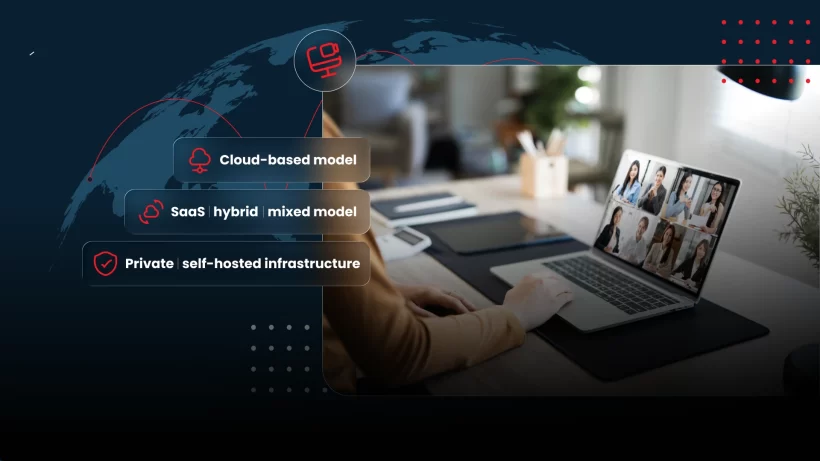
- Evaluate deployment models (private cloud, SaaS, self-hosted) based on security, compliance, and integration capabilities.
- Consider the total cost of ownership, including upfront and recurring costs, alongside vendor support and technical assistance to ensure a successful video infrastructure implementation.
Assessing Your Business Needs

Determining your business needs is essential for selecting the appropriate video infrastructure. Tailoring video solutions to specific requirements can lead to more effective outcomes and enhanced operational efficiency. Key factors to consider include:
-
Organizational goals
-
Technical capabilities
-
Alignment with user needs
Focusing on these aspects ensures the selected video infrastructure supports your business objectives and offers a seamless user experience.
Evaluating your business needs and goals requires a thorough analysis of current operations and future growth plans. This process involves identifying key use cases, ensuring scalability and flexibility, and prioritizing user experience and engagement. Examining each of these aspects in detail will provide a clearer picture of what to seek in your video infrastructure.
Identify Key Use Cases
One of the first steps in selecting the right video infrastructure is identifying the key use cases for your organization. Common use cases include:- Team huddles
- Training sessions/ Lectures
- Webinars
- Remote patient observation
Ensure Scalability and Flexibility
Prioritizing scaling and flexibility ensures your video infrastructure remains future-ready. Scalable solutions enable you to handle increased usage and expand your services as needed. Flexible deployment options allow your video infrastructure to adapt to growth and changing demands. Your ability to modernize your business requires a video infrastructure selection that can grow with your organizational needs, providing future-ready communication experiences. A robust backend infrastructure is crucial for deploying generative video services, ensuring scalability, storage, and reliability.Prioritize User Experience and Engagement
A strong video infrastructure must deliver more than technical reliability. It should provide an intuitive, engaging experience for end users. A simple, well-designed interface enables teams to adopt and experiment quickly, driving higher satisfaction and long-term usage. Interactive features such as real-time previews, editing tools, and customizable layouts can make platforms more dynamic and accessible. AI-powered video infrastructures are gaining precedence because AI capabilities add further value by personalizing content, automating tasks, and offering analytics that reveal how participants engage with sessions. Finally, gathering feedback during pilot programs is essential. It helps identify usability issues early, refine the platform, and ensure the chosen solution is practical, efficient, and aligned with user expectations.Evaluate Different Deployment Models

- Current challenges
- Specific requirements
- Performance metrics
- Flexible deployment and scalability
1. Private Cloud Solutions
Private cloud solutions offer organizations the ability to maintain control over their data and ensure maximum privacy by self-hosting their communications infrastructure in data centers. These solutions allow for customized infrastructure to meet specific governance and regulatory requirements, ensuring compliance with industry standards. Private cloud video infrastructure is designed for high availability, including redundant servers to maintain performance and minimize downtime. This makes private cloud solutions ideal for industries with strict regulations, providing enhanced data privacy, compliance capabilities, and reliable infrastructure.2. Software as a Service (SaaS)
Software as a Service (SaaS) solutions are easy to manage, require minimal resources, and eliminate the burden of hardware ownership. SaaS solutions provide an effective model for video conferencing, offering cloud-based streaming solutions that enhance productivity. When choosing a SaaS provider, companies should prioritize those with a dedicated global network for optimal video performance and scalability. This ensures that the video conferencing solutions can handle increased usage and provide a seamless user experience.3. Self-Hosted Options
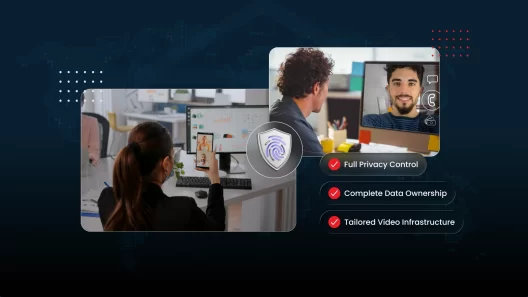
Self-hosted video platforms provide organizations with full control over their data environment and the ability to tailor it to their specific needs. These solutions allow for customization to meet specific compliance and data security requirements. Administrators can easily adjust capacity as needed with self-hosted solutions, enabling scalable growth. This makes self-hosted options ideal for businesses that prioritize data sovereignty and require tailored security measures.Security and Compliance
Data Protection Strategies
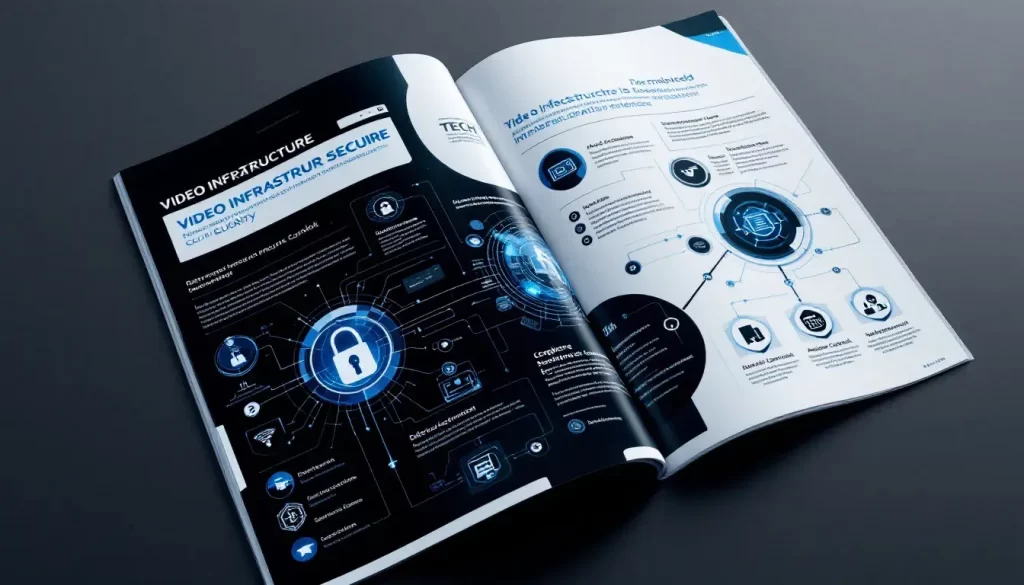
Effective data protection strategies safeguard video data against unauthorized access and breaches.-
Use end-to-end encryption for video data during transmission.
- Limit access to video data to authorized personnel.
-
Conduct regular audits to identify potential vulnerabilities in video data protection systems.
Meeting the Compliance Requirements
Compliance with data protection laws ensures secure handling of media and adherence to industry standards. Privately hosted solutions can be configured without third-party AI, giving organizations greater control over compliance, data, and security. Self-hosted solutions provide greater control over security and data management, making them well-suited for industries with strict compliance requirements. Platforms like Altegon are built with HIPAA and GDPR compliance in mind, making them suitable for organizations handling sensitive data. Private cloud infrastructure can also support government-grade compliance frameworks, which is crucial for public sector organizations.Integration Capabilities

Compatibility with Existing Tools
Compatibility with existing software and platforms streamlines workflows and reduces friction. For example, healthcare organizations may integrate video infrastructure directly into electronic health record (EHR) systems, while enterprises embed it within project management and collaboration platforms. Such integrations eliminate duplication of effort and create a unified experience for both employees and customers. Offering SDKs and APIs for custom integrations also makes video infrastructure suitable for embedded video solutions in specialized industries. Cloud-based deployments further reduce hardware dependencies, allowing teams to focus on core business operations without worrying about infrastructure overhead.API and SDK Availability
APIs and SDKs empower developers to create customizable video infrastructure tailored to specific business needs. Whether embedding video into a customer portal, integrating with internal CRMs, or building a secure telehealth platform, these tools enable organizations to expand functionalities and develop personalized features. By leveraging APIs and SDKs, businesses can design a flexible, adaptable video communication ecosystem that evolves with their requirements.Performance and Reliability
Latency and Bandwidth Management
Managing latency and bandwidth directly impacts user experience. Ultra-low latency streaming ensures real-time interactions feel natural, while efficient bandwidth management prevents disruptions during peak usage. This is particularly important for applications that require real-time interaction, such as video conferencing and live streaming solutions. For video conferencing, keeping latency under 150 milliseconds is ideal to maintain smooth conversations.Redundancy and Uptime Guarantees
Redundancy and uptime guarantees are vital for business continuity. High availability architectures safeguard against outages, ensuring video services remain accessible even during hardware or network failures. Uptime SLAs (Service Level Agreements) demonstrate vendor commitment to reliability and give organizations confidence that communication won’t be interrupted. By prioritizing these factors when choosing your video infrastructure consistently delivers a dependable experience for users.Cost Considerations
Upfront vs. Recurring Costs
Understanding the cost structure is crucial for businesses when choosing video infrastructure, as it can significantly impact budgeting and long-term planning. Upfront licensing costs often involve a one-time payment for the software or platform, potentially offering significant savings over time. Recurring subscription fees, on the other hand, may offer greater flexibility and scalability but can accumulate significant expenses over multiple years. Ultimately, businesses should weigh their immediate financial capabilities against long-term operational needs to decide between upfront and recurring costs.Total Cost of Ownership
TCO gives the clearest picture of long-term value. It factors in maintenance, support, upgrades, and hardware requirements. Some platforms offer flexible licensing options that combine both upfront payments and ongoing support costs. Cloud services lower setup costs but may increase recurring expenses. By evaluating both financial and operational implications, businesses can choose a model that sustains performance without straining budgets. ART Platform video infrastructure strengthens this equation by offering a communication platform with transparent pricing and true ownership, allowing organizations to avoid hidden costs while maintaining full control over their infrastructure.Support and Customer Service
Technical Support Availability
When assessing providers, look for 24/7 technical support options combined with access to account or customer success managers. This ensures not only immediate help during outages or technical issues but also ongoing strategic guidance to optimize platform use. The combination of reactive and proactive support is what creates real reliability.Training and Resources
Comprehensive training programs and accessible resources, such as webinars, onboarding workshops, and clear documentation, are key to helping teams unlock the full potential of a platform. Providers that invest in robust educational resources empower organizations to onboard faster, increase user confidence, and continually adapt as new features are released.Making the Final Decision
Vendor Comparison Checklist
Having a vendor comparison checklist is vital for systematically evaluating potential video solutions. The checklist should include core criteria such as:- Features: Does the platform meet current and future requirements?
- Cost: How do upfront and recurring expenses align with budget and ROI goals?
- Support: What level of technical and customer service is available?
- Security: Does the solution meet compliance and data protection standards?
Pilot Testing and Feedback
Running a pilot test provides real-world insight into usability, performance, and user adoption. Gathering feedback from employees, clients, or other stakeholders highlights what works well and where friction points exist. This process helps refine requirements, uncover hidden challenges, and validate whether the infrastructure can scale effectively.Summary
Choosing video infrastructure is not just about technology, it’s a multifaceted process that requires careful consideration of various factors. It’s also about ensuring a strong return on investment. A thorough evaluation process, supported by structured comparisons and real-world testing, will help in determining the best video solution for your organization.
Remember, the right video infrastructure can significantly impact your business’s success, so take the time to thoroughly evaluate your options and choose the solution that best meets your needs.




Comments are closed.