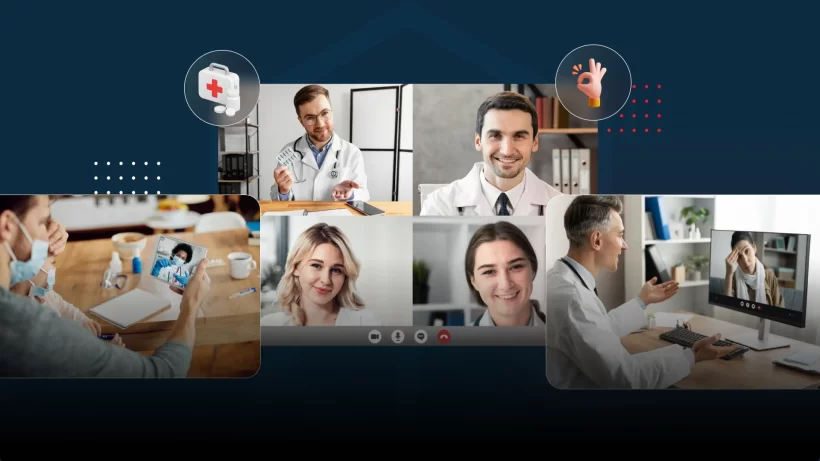
Even after years of digital innovation, a simple video call between a doctor and a patient can still break down over a weak connection or poor interface. Every dropped call or lagging video isn’t just a technical glitch, it’s a missed moment of care, a moment that shapes how patients perceive digital healthcare’s credibility.
As its use continues to rise post-pandemic, the real challenge isn’t adoption but experience. To truly fulfill its promise, telemedicine must go beyond convenience, focusing on real-time engagement, reliability, and personalization that rebuild patient trust and deliver care as seamless as an in-person visit.
In this article, we’ll explore practical ways to enhance telemedicine through real-time engagement, smarter customization, and cost-predictable design hallmarks of modern, patient-centric healthcare.
Key Strategies to Improve the Telemedicine Experience
A 200ms delay in video transmission can reduce conversational satisfaction by nearly 40% proving why real-time optimization is the heart of effective telemedicine.
1. Strengthen Real-Time Patient Interaction
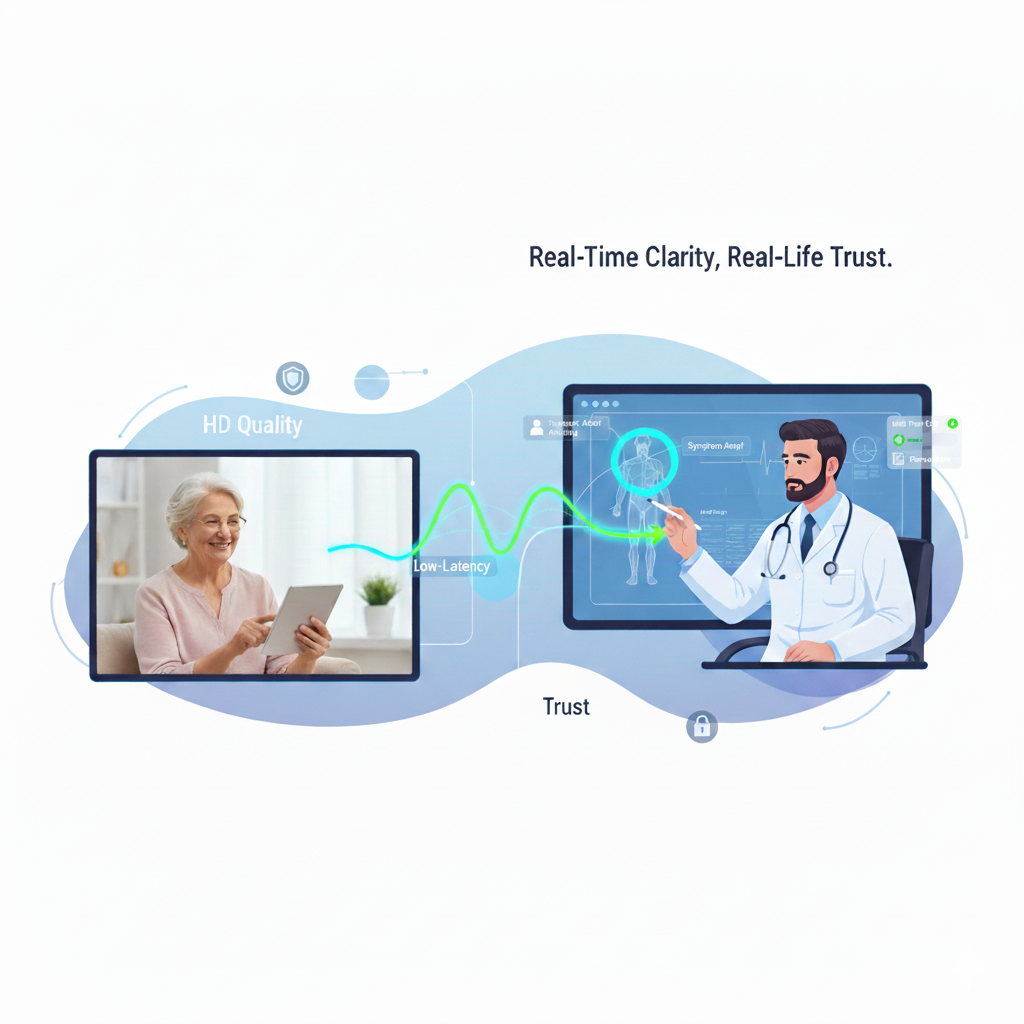
Even with today’s digital tools, telemedicine often fails at its most basic function: clear communication. A brief audio lag or pixelated feed can disrupt a diagnosis or erode patient trust. That’s why real-time engagement remains the cornerstone of effective virtual care.
Modern video communication platforms now offer low-latency streaming and adaptive bandwidth control to ensure smooth, HD-quality calls (720p–1080p) even in challenging network environments. When paired with real-time chat, interactive whiteboards, and annotation tools, physicians and patients can share insights visually and verbally improving clarity and confidence in every consultation.
Reliable engagement isn’t just a technical necessity; it’s a UX and brand advantage that builds long-term trust and reduces operational inefficiency.
| Expert Tip: Optimize for “perceived quality,” not just technical quality. Patients notice emotional responsiveness faster than pixel density. |
2. Streamline Documentation with Real-Time Transcription
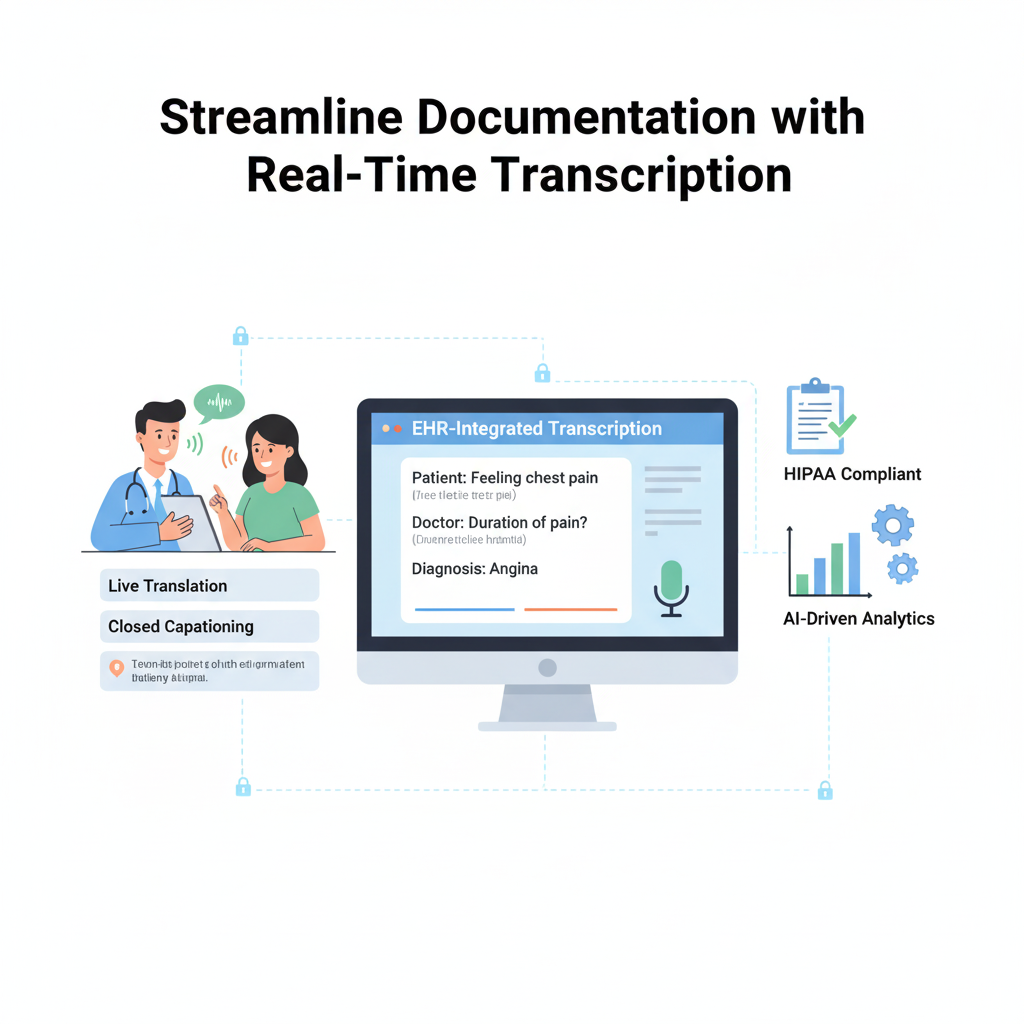
Accuracy defines credibility in healthcare. Every word exchanged between a physician and a patient can influence care outcomes. Real-time transcription and scribing technologies now make it possible to automatically capture and store clinical conversations with precision.
Integrated EHR-compatible transcription services reduce manual note-taking, speed up documentation, and improve focus during consultations. Combined with live translation and closed captioning, they also make healthcare more inclusive and accessible to non-native speakers.
These secure, HIPAA-compliant communication APIs ensure that sensitive information remains protected while enabling a seamless digital record trail. Beyond daily use, aggregated transcription data supports AI-driven analytics, helping healthcare systems identify trends and optimize workflows over time.
| Did You Know? Doctors spend up to 35% of telehealth consultation time on manual documentation automation that gives that time back to patient care. |
3. Connect Smart Wearable Devices for Continuous Monitoring

The future of telemedicine lies in continuous care not just scheduled consultations. By integrating wearable devices and IoT sensors into telehealth platforms, providers can access real-time patient data that deepens insight and enables proactive care.
Smart watches, glucose monitors, and pulse oximeters can stream vital signs like heart rate, temperature, and oxygen saturation directly into secure cloud dashboards. Physicians gain instant visibility into patient health, allowing for earlier intervention and personalized treatment plans.
Beyond convenience, this integration minimizes readmissions and enhances the quality of remote monitoring, two major factors that directly reduce the total cost of ownership (TCO) for digital healthcare infrastructure.
4. Personalize Every Virtual Visit

A great telemedicine experience feels human, not transactional. Customization is what turns a generic video call into a meaningful care session.
Customizable telehealth solutions now let providers tailor everything from UI themes and brand colors to workflow automation and user dashboards creating a sense of continuity between in-person and digital experiences. Patients feel more comfortable, while healthcare organizations maintain consistent brand trust.
Personalization also improves efficiency. Adaptive workflows reduce administrative tasks and technical friction, letting doctors focus on care rather than navigation. Over time, this reduces the hidden UX debt and support costs often overlooked in traditional off-the-shelf video SDKs.
| For example:Continuous glucose monitoring through smart wearables has reduced emergency hospital visits by up to 20% in remote diabetes programs. |
5. Harness AI and Emerging Technologies

Artificial Intelligence is no longer a buzzword in telemedicine, it’s a fundamental enabler of smarter, more predictive care. From AI-powered triage assistants to machine learning models that detect anomalies in video or audio streams, the potential for innovation is expanding rapidly.
Integrating AI, AR, and VR technologies allows providers to enhance everything from pain management and rehabilitation to immersive medical training. Predictive analytics also helps identify high-risk patients, optimize scheduling, and reduce wait times.
For telemedicine providers, the key lies in balancing innovation with infrastructure. AI can transform the quality of care, but only when supported by a secure, low-latency, and scalable video communication framework.
| In the near future, expect AI to detect fatigue or stress through micro facial expressions during video calls reshaping how doctors interpret patient well-being remotely. |
6. Prioritize Compliance, Scalability, and Predictable Growth

In digital healthcare, trust is built on three pillars: security, compliance, and scalability. As telemedicine platforms evolve, maintaining adherence to frameworks like HIPAA, GDPR, and ISO standards is crucial to protecting patient data and ensuring service reliability.
Future-ready platforms, especially altegon are now designed around cost predictability, using modular APIs that scale with usage. This helps healthcare providers avoid unpredictable costs and performance drops as they grow.
A focus on transparent pricing, regulatory alignment, and flexible infrastructure ensures that virtual care remains both financially sustainable and technologically future-proof, the foundation for long-term digital health transformation.
| Quick Tip: Many providers face compliance friction only when scaling globally Altegon’s modular APIs are built to keep compliance adaptive, not reactive. |
Read More:Top Features to Look for in a Telehealth Video Platform
Wrapping Lines!
The evolution of telemedicine isn’t defined by how far technology can go, but by how well it can bring people closer. In today’s digital healthcare landscape, patients expect clarity, compassion, and consistency every time they connect.
Altegon helps healthcare providers go beyond standard video calls, enabling custom-built, real-time communication experiences that are reliable, compliant, and cost-efficient. With our scalable APIs and customer-first design philosophy, we empower organizations to deliver virtual care that feels as genuine as an in-person visit without the unpredictable costs.
At Altegon, we believe the future of healthcare isn’t just digital, it’s deeply human, reliably connected, and infinitely customizable.
FAQs
1. How does Altegon differentiate itself from generic video SDK providers?
While many SDKs focus on generic video connectivity, Altegon was designed for human-centered engagement in high-trust sectors like healthcare. Our platform prioritizes low-latency performance, predictable pricing, and modular customization empowering healthcare innovators to create digital care systems that feel seamless, secure, and deeply personal.
2. What are the biggest hidden costs in telemedicine platforms?
Many platforms include hidden costs like bandwidth inefficiencies, downtime, or upgrade fees. With Altegon Generally hidden cost associated with usage volume, extra features, customization etc
3. How can customization improve patient engagement?
Customization creates familiarity and familiarity builds trust. When healthcare platforms reflect the provider’s brand, tone, and workflow, patients feel more confident and engaged. Personalized interfaces and adaptive user journeys lead to better compliance, higher satisfaction, and more effective care delivery.
4. What factors should healthcare organizations evaluate before adopting a video communication API?
Before integration, teams should assess scalability, latency, compliance standards (HIPAA, GDPR), and vendor flexibility. A good video API should adapt to different network conditions, support multi-platform devices, and allow full UI customization. Most importantly, it should offer transparent pricing to prevent unforeseen infrastructure costs as usage grows.
5. Is off-the-shelf telemedicine software enough for long-term scalability?
Off-the-shelf solutions are great for quick launches but often lead to limited customization, branding restrictions, and hidden upgrade costs. As patient expectations evolve, providers need flexibility to add features, integrate wearables, or personalize workflows, something only customized, API-driven platforms can fully support.
6. What’s next for telemedicine innovation?
The future lies in hybrid care ecosystems blending in-person and virtual experiences through AI, edge computing, and real-time analytics. Healthcare will move toward platforms that personalize every interaction, anticipate needs, and scale without friction. Altegon continues to invest in technologies that make this next phase of telemedicine more reliable, intelligent, and patient-centric.